On This Page
Overview
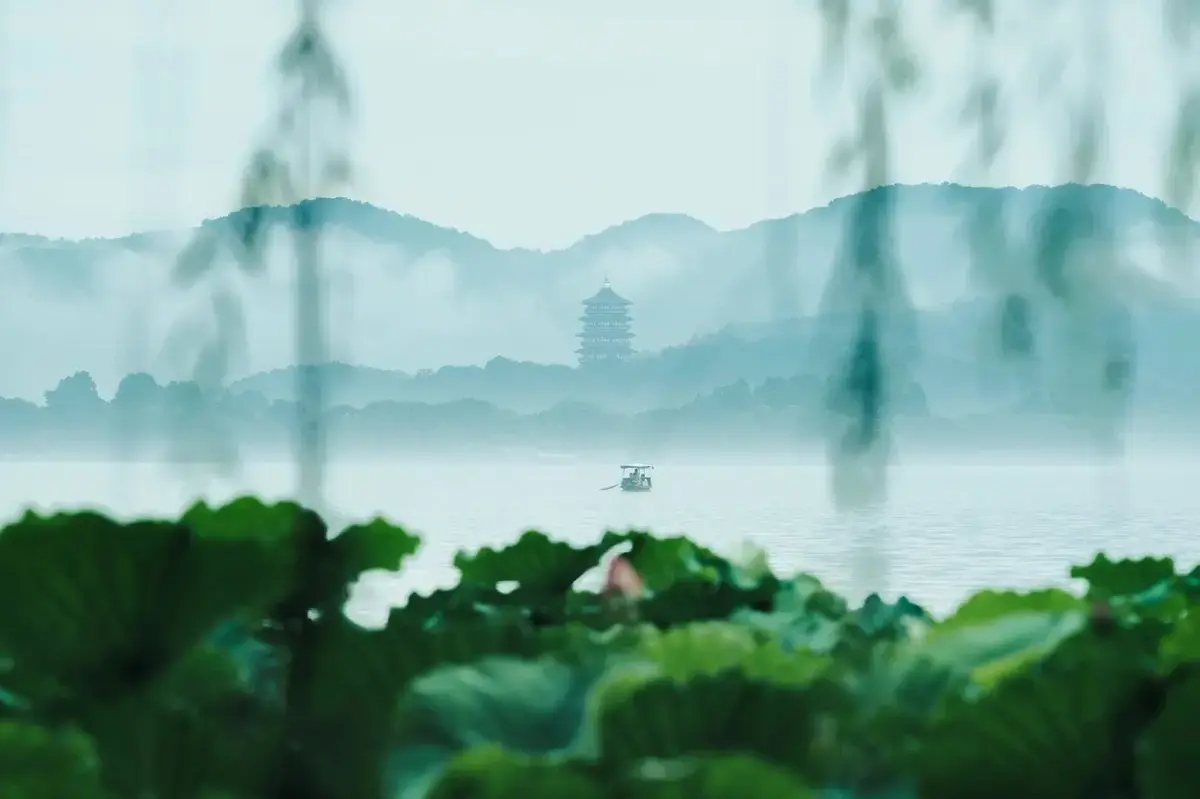
One day in Hangzhou is ambitious but absolutely doable. This itinerary packs the city's greatest hits into a single, well-paced day — you will see the iconic West Lake, step inside a 1,600-year-old Buddhist temple, taste authentic Longjing tea at its source, and wander a historic street that has been trading for centuries. The route is designed to minimize transit time: you start on the lakeside, move clockwise around the lake, then head into the hills for temples and tea before returning to the city center for evening festivities.
This itinerary works best if you are arriving from Shanghai by high-speed train in the morning (the 7:00 AM train from Shanghai Hongqiao gets you to Hangzhou East by 7:45 AM). If you are already staying in Hangzhou, you can start even earlier and add the optional sunset stop at the end. Total cost for the day, excluding the train ticket: approximately 300–500 RMB ($40–70 USD) including entry fees, meals, tea, and local transport.
💡 Pro Tip: Start Early
The 7:30 AM start is non-negotiable if you want to fit everything in. West Lake is at its most magical in the early morning — mist on the water, locals doing tai chi, and almost no tour groups. The light is also perfect for photography before 9:00 AM.
Minute-by-Minute Timeline
7:30–8:30 AM — Breakfast at a Local Noodle Shop
Start your day the Hangzhou way: with a steaming bowl of 片儿川 (Pian Er Chuan), the city's signature noodle soup with pork, pickled vegetables, and bamboo shoots. Head to 知味观 (Zhi Wei Guan) on Renhe Road — a century-old institution where locals queue before work — or try Kuiyuan Guan on Jiefang Road for their legendary noodles in fish broth. Expect to pay 20–35 RMB per bowl. If noodles are not your morning thing, grab congbaohui (scallion pancakes) from street stalls near the lake for 5–10 RMB. Eat fast — the lake is waiting.
8:30–10:30 AM — West Lake Morning Walk
Enter the lakefront from Hubin Road and walk east to north along the legendary Broken Bridge (断桥) and Bai Causeway (白堤). This 3.5km stretch is the most iconic section of West Lake: willow trees draping into the water, views across to the city skyline and distant hills, and the famous "Autumn Moon Over Calm Lake" pavilion at its midpoint. The causeway takes about 50 minutes at a stroll. Stop at the Zhongshan Park viewpoint for the classic postcard shot — the one that appears on the back of the 1 RMB note. This is also where you fully understand why West Lake is a UNESCO World Heritage site.
Entry: Free. Total walking: ~3.5km. Crowds: Light before 9:30 AM, moderate by 10:00 AM.
10:30–11:30 AM — Leifeng Pagoda
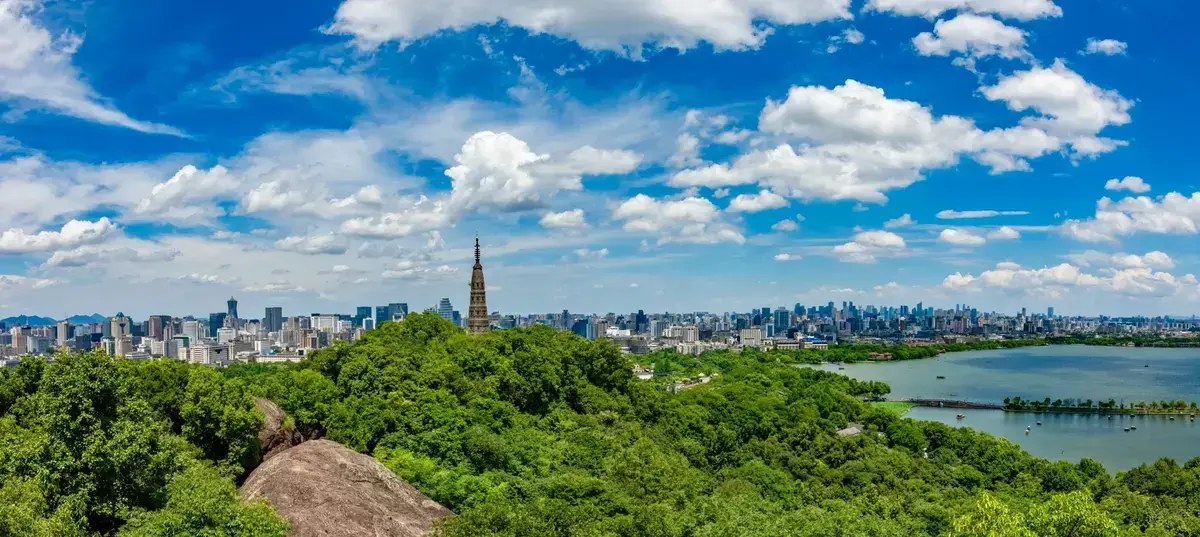
Take a Didi (15 minutes, ~20 RMB) or bus 4 from the lake to Leifeng Pagoda (雷峰塔). The original pagoda was built in 975 AD and collapsed in 1924; the current structure is a stunning 2002 reconstruction with a modern glass elevator inside the ancient shell. Ride the elevator to the top floor (or climb the stairs — 5 floors) for a panoramic view of West Lake that is genuinely breathtaking. On a clear day you can see the entire lake, Hangzhou city, and the surrounding tea hills. The pagoda also contains excavated relics from the original structure in the underground museum. Entry: 40 RMB. Allow 45–60 minutes.
11:30 AM–12:30 PM — Lunch Near Hubin Road
Walk back down toward Hubin Road and grab lunch. For a sit-down meal, Green Tea Restaurant (绿茶) on Hubin Road serves excellent Hangzhou cuisine in a beautiful lake-view setting — try the beggar's chicken (叫花鸡) and Dongpo pork (东坡肉), two Hangzhou classics. Expect 80–120 RMB per person. For something faster, the Hubin In77 mall has dozens of restaurants on the basement level, from soup dumplings to hot pot. Budget 40–60 RMB here. If you need caffeine, there are Starbucks and Manner Coffee locations along Hubin Road, plus excellent local coffee shops like Seesaw Coffee on the 3rd floor of In77.
12:30–2:00 PM — Lingyin Temple
Take a Didi west toward the hills (~25 minutes, ~30 RMB) to Lingyin Temple (灵隐寺), one of China's largest and most important Buddhist temples. Founded in 328 AD, the temple complex nestles between two forested peaks and contains halls filled with intricate Buddha carvings, massive incense burners, and the famous Feilai Feng (Peak That Flew Here) grotto with over 340 stone Buddha carvings dating from the 10th to 14th centuries. Do not skip Feilai Feng — it is included in the entry fee and the carvings are remarkable. Entry: 75 RMB combined ticket (Feilai Feng scenic area + Lingyin Temple). Allow 90 minutes. Note: Incense is provided free at the temple entrance.
2:00–3:00 PM — Tea Break at Longjing Village
A 15-minute Didi from Lingyin (~15 RMB) brings you to Longjing Village (龙井村), the birthplace of China's most famous green tea. Walk up the village road past tea terraces cascading down the hillsides. Stop at any tea house with terrace seating — Longjing Imperial Tea Garden is the most accessible — and order a pot of fresh Longjing tea (typically 50–80 RMB per pot). The tea here is picked and processed within kilometers of where you are sitting. Watch the tea master pour water at exactly 80 degrees Celsius in the traditional ceremony. If you want to buy tea to take home, prices in the village range from 200–800 RMB per 500g depending on grade (first-pick spring tea is the most expensive). The village is small and walkable in 30 minutes.
3:00–4:30 PM — Hefang Street
Didi back to the city center (~25 minutes, ~25 RMB) to Hefang Street (河坊街), a restored historic pedestrian thoroughfare that has been a commercial hub since the Southern Song Dynasty (1127–1279). The architecture is Ming and Qing style, with dark wood facades, hanging red lanterns, and stone-paved lanes. This is your souvenir stop: silk scarves, Longjing tea, hand-painted fans, calligraphy brushes, and the famous Wang Xing Ji fan shop (operating since 1875). Try street snacks as you walk: ding sheng gao (定胜糕), sticky rice cakes in bamboo molds, and cong bao hui scallion pancakes. The side alleys — especially Dajing Lane — are quieter and have better small shops. Free entry, budget 30–60 RMB for snacks.
4:30–5:30 PM — Optional: Chenghuang Pavilion for Sunset
If you have the energy (and daylight — works best March–October), climb the steps from Hefang Street up Wushan Hill to Chenghuang Pavilion (城隍阁). This seven-story tower sits on the highest point in central Hangzhou and offers the most spectacular sunset view over West Lake, the Qiantang River, and the city. The golden hour light here, with the lake reflecting the sky and the pagoda silhouettes in the distance, is arguably the best photo opportunity of the entire day. Entry: 30 RMB. The climb takes 15 minutes from Hefang Street. If you are short on time or exhausted, skip this and head straight to dinner — you will still have had a fantastic day.
6:00–7:30 PM — Dinner
For the classic Hangzhou dining experience, book Lou Wai Lou (楼外楼) on the lakefront — established in 1848, it is the most famous restaurant in Hangzhou. Their West Lake Vinegar Fish (西湖醋鱼) is the definitive version of the dish. Expect 150–200 RMB per person. For a more modern take, 28 Hubin Road in the Hyatt Regency serves refined Hangzhou cuisine with lake views (250+ RMB per person). Budget alternative: Grandma's Kitchen (外婆家) has multiple locations and serves reliable Hangzhou comfort food for 60–80 RMB per person — their braised pork belly is excellent.
7:30–8:30 PM — Evening Lakeside Stroll & Musical Fountain
End your day with a gentle walk along the lakefront promenade near Hubin Road. The lake is illuminated at night: Leifeng Pagoda glows golden across the water, and the city skyline reflects on the surface. If you are lucky, the West Lake Musical Fountain near the Hyatt will be running (free, typically at 7:00 PM and 8:00 PM, check locally as schedules change seasonally). This is the moment to slow down, breathe, and appreciate that you just experienced 1,500 years of Hangzhou history in a single day. Grab a scoop of Longjing tea ice cream from a lakeside vendor (15 RMB) — it is surprisingly delicious and a fitting endnote.
Getting Around
Hangzhou has an excellent public transport network and ride-hailing is cheap and ubiquitous. Here is what you need to know for this itinerary:
- Metro Line 1 connects Hangzhou East Railway Station to Longxiangqiao (Hubin Road area) in about 15 minutes. A single ride costs 3–6 RMB. Buy tickets from machines (English available) or use Alipay's transport QR code.
- Didi (Chinese Uber) is the most efficient way to get between stops not on the metro. Rides within the city center cost 15–35 RMB. You need the DiDi app or the Didi mini-program inside Alipay. Payment is automatic if you have set up Alipay.
- Public buses cost 2 RMB and routes 4, 7, and 游2 (Tourist 2) are useful for lake-area travel. Pay with Alipay transport code or exact change.
- Shared bikes (Hello Bike / Meituan Bike) are everywhere and cost 1.5 RMB per 30 minutes. Use Alipay to scan and unlock. The lakefront paths are beautiful for cycling but note that some sections near Bai Causeway restrict bikes during peak hours.
- Walking is genuinely the best way to experience the lakefront, Hefang Street, and Longjing Village. Wear comfortable shoes — you will walk 8–10 km today.
⚠ Traffic Reality Check
Hangzhou traffic can be brutal, especially on weekends and holidays (particularly Golden Week in early October and Chinese New Year). The Lingyin Temple area gets extremely congested by 9:30 AM. If you are visiting during a Chinese holiday, add 30–45 minutes buffer to each transit leg and consider using the metro to get as close as possible before switching to Didi.
What to Skip If Short on Time
If you are running behind schedule (train delays happen, or you sleep in, or you linger too long at the tea house — no judgment), here is the priority triage:
- Skip first: Chenghuang Pavilion (Step 8) — It is explicitly optional and adds a hill climb. Save 1 hour.
- Skip second: Longjing Village tea break (Step 6) — Shorten to a 20-minute photo stop instead of a full hour. You can buy Longjing tea anywhere; the village is atmospheric but not essential if pressed.
- Skip third: Hefang Street (Step 7) — Shorten to a 30-minute walk-through. The street is nice but if you do not need souvenirs, spend the time at Lingyin or the lake instead.
- Never skip: West Lake morning walk, Lingyin Temple, and Leifeng Pagoda. These three are the non-negotiable core of Hangzhou. Everything else is a bonus.
Packing Tips for a Day Trip
You are on the move from 7:30 AM to 8:30 PM. Pack light but smart:
- Comfortable walking shoes — This is the single most important item. You will walk 8–10 km on pavement, stone paths, and hill steps. No flip-flops, no brand-new shoes. Broken-in sneakers are ideal.
- Portable battery pack — You will use your phone constantly for maps, Alipay payments, translation, and photos. A 10,000 mAh power bank is sufficient. Phone batteries drain faster in cold weather.
- Small backpack, not a shoulder bag — A 15–20L daypack distributes weight evenly and keeps your hands free for photos and snacks.
- Water bottle — There are convenience stores everywhere, but having water on hand saves time. Tap water in China is not potable; buy bottled water (2–3 RMB).
- Layer your clothing — Mornings by the lake can be chilly even in spring and autumn. A light jacket or sweater you can remove by midday is perfect. In summer (June–August), bring sunscreen, a hat, and expect to sweat — Hangzhou summers are hot and humid.
- Tissues / wet wipes — Public restrooms do not always have toilet paper or soap. Small packs of tissues are sold at every convenience store if you forget.
- Passport — You need it for the train, and technically you should carry it at all times in China. Some attractions may ask for ID. Keep it in a secure zipped pocket.
- VPN pre-installed — Confirm your VPN is working before you leave your hotel or before you board the train. You will want Google Maps, Instagram, and WhatsApp throughout the day. See our VPN guide.
💡 Rain Plan
Hangzhou gets frequent rain, especially in spring (the "plum rain" season in June–July can be relentless). A compact umbrella costs 15–30 RMB at any convenience store. More important: West Lake in the rain is famously beautiful — mist settles over the water and the hills fade into layers of grey. The Chinese phrase "misty rain on West Lake" (西湖烟雨) describes one of Hangzhou's most celebrated views. Do not cancel your day for rain. It might be the most atmospheric version of the lake you will ever see.
Continue Your Planning
One day leaves you wanting more — and Hangzhou has much more to give. Extend your trip with these related itineraries: